

Warning:
This post contains mentions of childhood abandonment and running away.
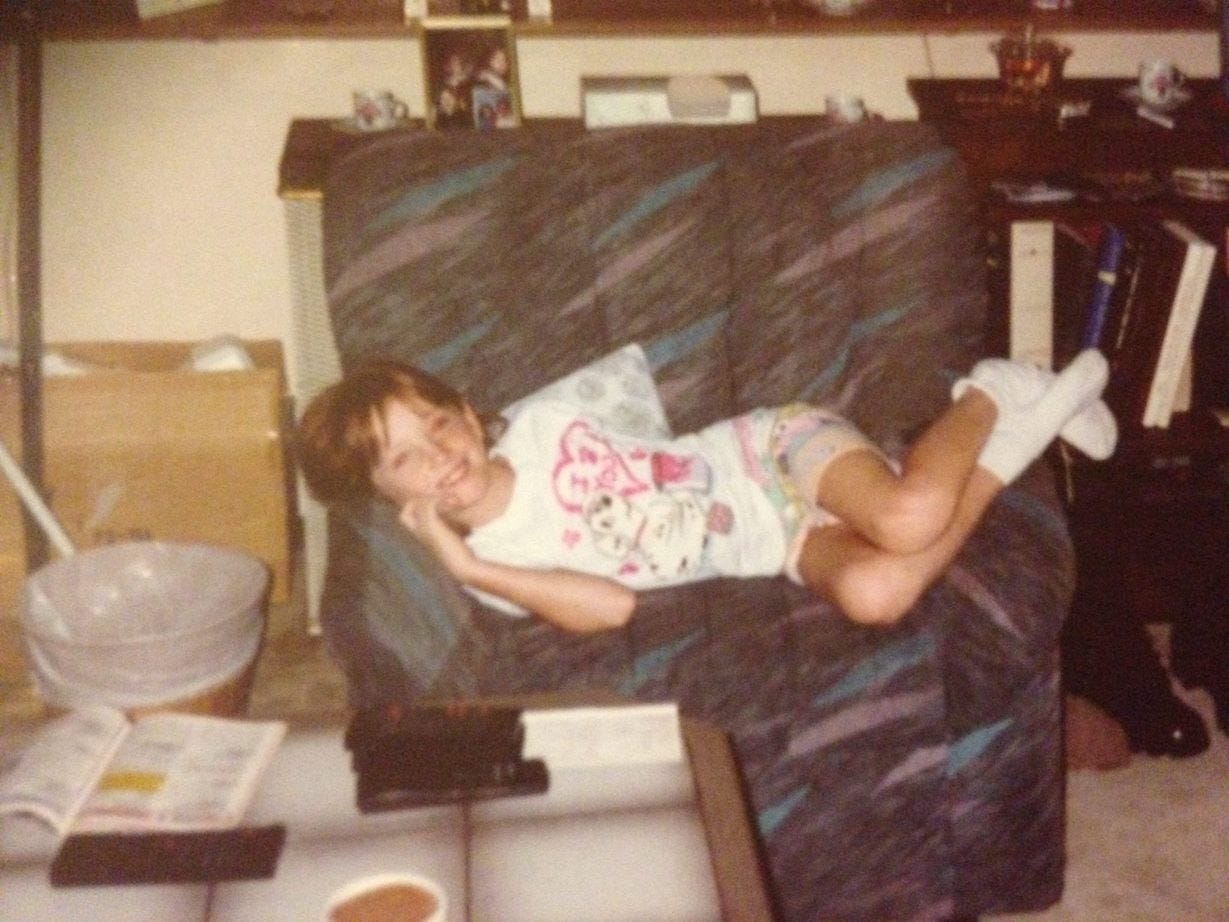
Rebecca Smith (who we’ll call RS.a per my prior post) loved adventures: reading about them, creating them, and experiencing them. She was never keen to share them, though. To this day, I prefer to adventure alone.
RS.a lived in a small house on what seemed like a huge piece of land in Dempseytown, Pennsylvania with her mother, younger sister, grandmother, grandfather, and always one-to-two uncles at a time. The tract of land was relatively narrow but extended deep into the woods between our house and her first school. Pulling into a gravel driveway, the house was on the immediate left, and the driveway ended at a wooden, seemingly hand-built garage. There aren’t any memories of cars fitting in the garage, but to RS.a, the garage was a treasure trove of fishing gear, tools, and unidentified machines and parts. It was cool and smelled of damp earth and lake water, an aroma that seeped into life jackets and nets from years of fishing trips with her grandfather and uncle. The back of the garage was lined with a stack of cinderblocks, spanning the entire width of the garage, and on top of that was the upside down metal boat, stored carefully after each fishing trip.
Beyond the garage was the clothesline, where her grandmother hung the freshly laundered clothes to dry with wooden laundry pins and clips. I don’t remember my grandmother using a laundry dryer while I lived there.
Beyond the clothes line was the apple tree. I think that tree was planted shortly after RS.a was born, and so, it was her first childhood companion until her sister came long. She picked apples so that grandmother could make apple pie, or so that grandfather could cut them: one for me, one for him, one for my sister, and always with a paring knife. Sometimes, the apples would overnight and rot on the ground. Rotting apples were some of RS.a’s first exposures to death and decay, along with the skeletal remains of fish that littered the back porch. Food for the stray cats, of course, and a smell that would become synonymous with returning home. More on the house later, though.
Beyond the apple tree extended a field that went all the way back to tall grasses that lined the edge of a deep wood. I don’t remember much about the property to our immediate right, other than they had a caged enclosure and that often housed a peacock. RS.a would go observe the peacock, feeding it with bits of food that had escaped its enclosure. She often drew the peacock, although none of those drawings have survived. The giant, elegant birds must’ve been from the other side of the world: vibrantly colored and majestic and short tempered. The neighbor’s peacocks were RS.a’s first exposure to captivity. One pecked her hand hard once, drawing blood. She didn’t cry; instead, she felt empathy for the caged creature. They could never leave, and although they were apparently kept for someone’s enjoyment, only the neighborhood children seemed to pay them any attention.
It was the trail into the woods that RS.a frequented on her solo adventures. The trail started at the property and led all the way to the elementary school. She took that trail often and enjoyed playing baseball and tetherball at the school on weekends and during summers. But that’s also another story for another day.
For RS.a, the trail was mostly for escaping. Little me would pack my backpack full of everything she needed to survive: provisions from the country store (beef jerky, salt and vinegar chips, Swedish fish but only the red ones), a blanket, at least one book, a flash light, a jacket. In a small bucket, she’d collect all the tools she’d need to build her shelter: a hammer and all of the rusty nails she could gather from the decrepit garage, bindings and cordage, an oil lamp and oil for it.
RS.a left home countless times with the intent of building a shelter in the woods, deep and far away, where nobody would find her. Over the years, she’d managed to build a decent structure. At one point, it even had a portion of it covered on three sides, with overhead shelter provided by an old tarp she’d dragged back there. After what seemed like a full day’s work, she’d stop and examine her work. Acceptable. Stable. Hers. She’d flip her bucket over, sit on it, light the lamp (even if it was light outside), and read and snack for hours.
Dusk was always the decision point. The country store provisions never lasted long enough, and she’d have to decide: stay overnight in the makeshift shelter, or venture home, where nobody but her sister would notice she’d been gone all day. Home, where grandmother would fall asleep upright at the table after a long night shift at the pizzeria, her lit cigarette still burning until she nodded forward hard enough to startle herself awake, take another drag, and put it out. Home, where sometimes her mom would be, and sometimes she wouldn’t. Home, where grandfather would fall asleep watching The Weather Channel or a late game of the Pittsburgh Pirates. Home, the fallback plan.
I won’t place much of a filter on what RS.a’s solo adventures were or why they were: she ran away with the intent of never coming home. She ran away often, and she was not afraid of anything but running out of food and of the creatures in the woods at night. Coming home was always admitting defeat, but little by little, RS.a built upon a self-sufficiency that other versions of myself heavily relied upon over the years.
She is the reason that I feel comfortable on all of my current solo adventures, the most exciting of which involve me sleeping in the woods, unafraid.
Previous Post:
